
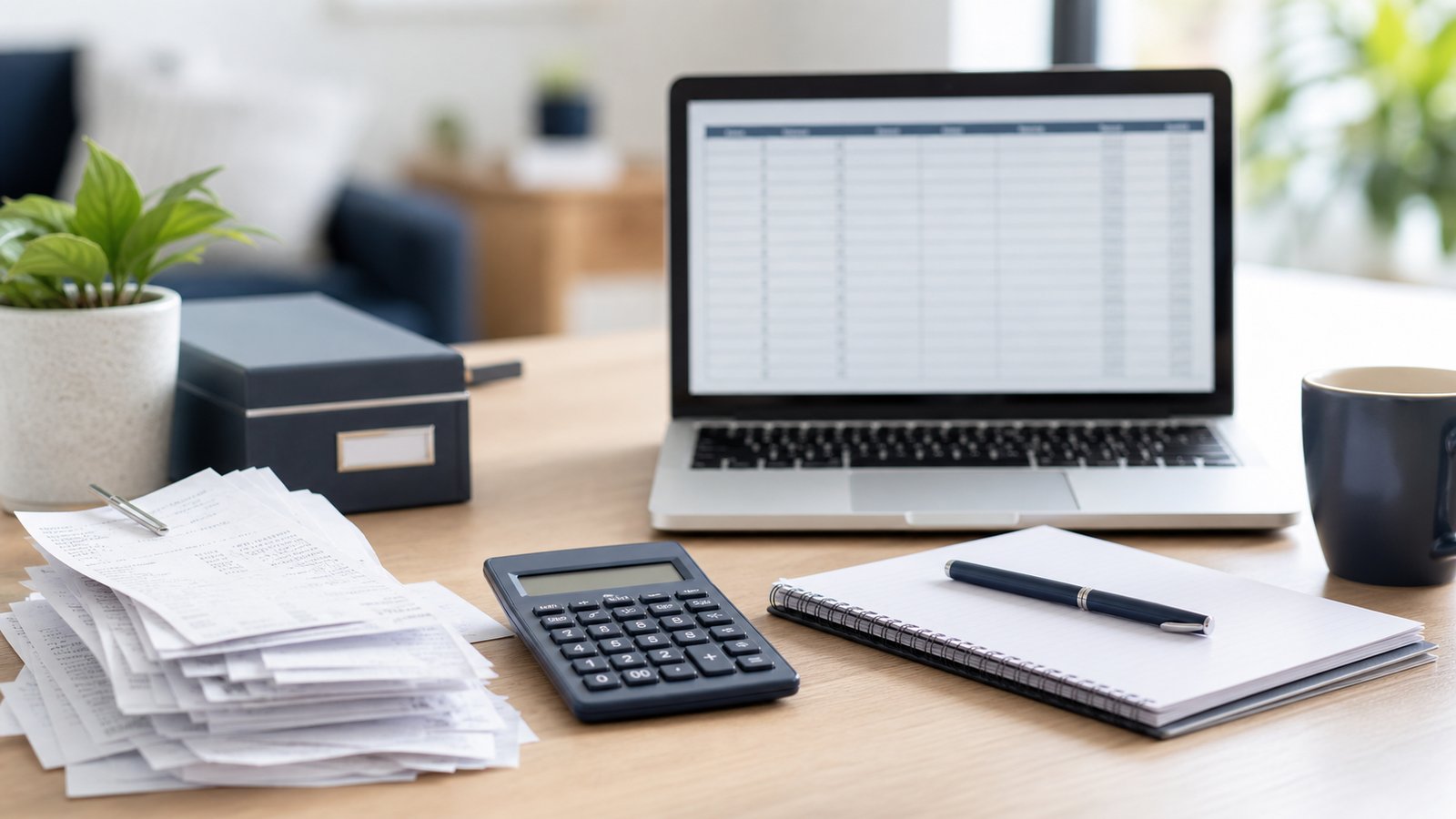
Claiming business expenses is one of the simplest ways for sole traders to reduce taxable profit and keep more of what they earn. To make accurate claims, keep clear records and claim only costs that are wholly and exclusively for your business. A simple monthly routine can make your self-assessment return far less stressful.
Claiming business expenses: what sole traders can claim
Allowable business expenses are the costs of running your business. Common examples include office supplies, business travel, accounting software, professional fees, advertising, business insurance and the business use of your phone. If you work from home, you may also be able to claim a reasonable proportion of household costs, such as heating, electricity or broadband.
For detailed guidance on allowable expenses, see HMRC’s expenses guidance for self-employed people. The rules can vary by expense type, so it is important to keep evidence and seek advice when you are unsure.
Keep spending separate
Use a dedicated business bank account where possible. This makes your bookkeeping easier to follow and gives you a clearer view of your cash flow. If a cost has both personal and business use, claim only the business proportion. Take particular care with mobile phones, home working and vehicle costs.
Keep every invoice, receipt and digital record, and add a short note explaining its business purpose. This will support your figures if HMRC asks questions later and helps you avoid missing valid costs.
A routine for claiming business expenses
Set aside time each month to upload receipts, reconcile transactions and review your records. Check for missing costs before you close the month. Good records show your profit more clearly, make tax planning easier and help you avoid a last-minute scramble at the end of the tax year.
A practical routine is to save receipts as soon as you receive them, categorise transactions weekly and reconcile your bank account monthly. Accounting software can automate much of this process and give you useful reports throughout the year.
Costs that need extra care
Some claims need closer attention. Entertainment for clients is generally not an allowable deduction, while staff entertaining may be treated differently. Capital items, such as equipment or machinery, may qualify for capital allowances instead of being claimed as a standard day-to-day expense. Mileage claims and vehicle costs also depend on how the vehicle is used.
When claiming business expenses, it is better to check before filing if you are unsure. Our bookkeeping services can help you maintain organised records, while our tax planning and accounts preparation support can help you make accurate claims with confidence.
Get help with your records
AA&R can help sole traders organise their bookkeeping, understand which costs they may claim and prepare for self-assessment with confidence. Complete the form below to book your free consultation.